乳幼児期のコミュニケーション
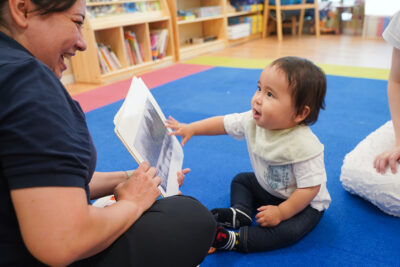
乳幼児は、身近な人やものとの関わりの中で、目に映るものや耳に聞こえるものに興味を持ちます。言葉にできない感情や意思を大人に汲み取ってもらい、欲求が満たされ愛情豊かに受け入れられる応答的な関わりを積み重ね、周りの世界や社会を知り成長していきます。
また、言葉の発達には子どもと身近な人との信頼関係も重要な要素のひとつです。子どもは言葉だけでなく言葉以外のジェスチャーやサイン、顔の表情や体の動きなど、さまざまな方法で気持ちを表現し発信しようとします。大人は子どもが伝えようとする行動を理解し、優しく見守り、共感しながら言葉を添えて応答し、互いの気持ちを響き合わせていくことが大切です。子どもと大人の関わりは、子ども自身からの働きかけに応え、楽しく尊重し合う環境で育まれることも大切です。子どもがコミュニケーションを取るために起こすアクションに優しく愛情深く応えてあげること、そのひとつひとつは尊いものであることを言葉かけや触れ合いを通して伝えていきましょう。何かを伝えようと周りに働きかけることで、世界がどんどん広がり成長していきます。
ベビーサイン
うまく話すことのできない赤ちゃんもコミュニケーションを取ろうと周りに働きかけます。「お腹がすいた」と泣くように、赤ちゃんにとってコミュニケーションの第一の動機は空腹感や快適さ、安心感、睡眠など自分の欲求を伝えることです。赤ちゃんは泣いたり笑ったり、何かに向かったり遠ざかったり、さまざまな体の動きや表情、しぐさで周りに欲求を伝えようとします。成長するにつれて、コミュニケーション能力が発達していき、例えば冷蔵庫を指さしながら「ミルク」と伝えようと声を出したり、ご機嫌ななめで物をポイっと投げたりすることもよくあることです。
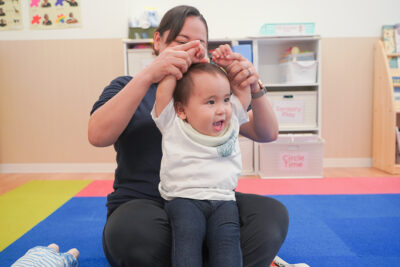
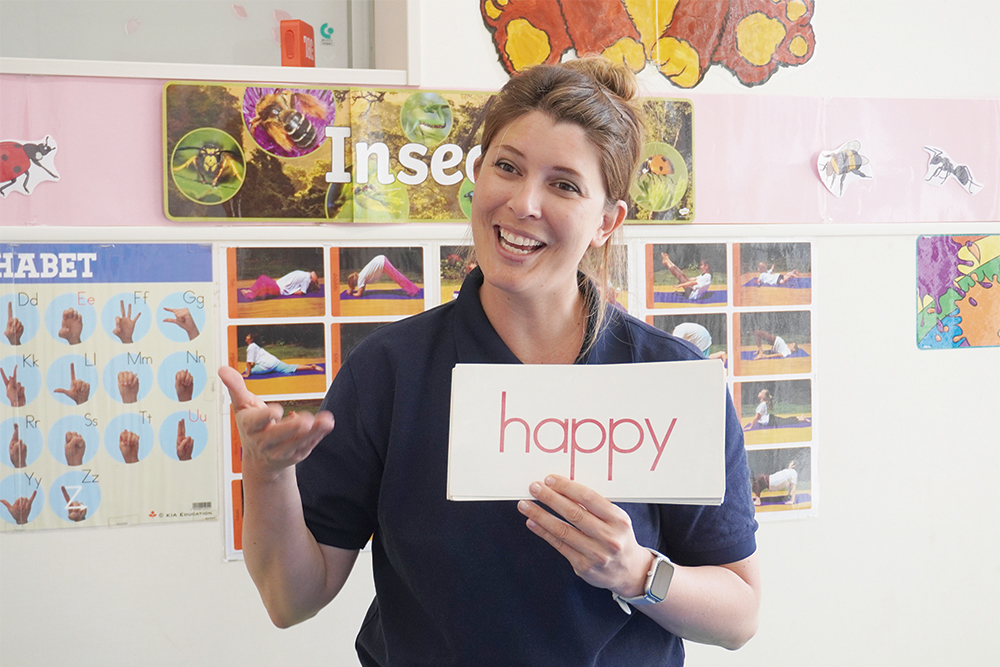
乳幼児部では、遊びを通して楽しく学べる環境の中で、保育者がベビーサインを使いながら声かけしたり、手遊び歌を歌ったりして子どもたちのボキャブラリーを増やしていきます。子どもたちが「もっと」「食べる」「手伝って」「お願い」「座る」など簡単なベビーサインを使うことで、自分の要望や欲求を表現できるようになり、フラストレーションの軽減にも役立ちます。
ご家庭でもベビーサインを取り入れることで、言葉を話し始める前の子どもたちのコミュニケーション能力を効果的にサポートすることができます。子どもがベビーサインを使えるようになるために、日々の生活でよく使う大切な単語を大人が繰り返しジェスチャーと共に語りかけていきましょう。
Enhancing Early Communication Skills
By communicating what they discover and feel to receptive and responsive adults, infants and toddlers enter into the sustaining social life of the community, where they connect with other people, test their ideas, and gain feedback about their actions or feelings or perceptions. Another important ingredient needed for language development to thrive is communication in a trusting relationship between the child and caregiver. It is important for caregivers to listen attentively and allow time for the child to process his or her thoughts; communicate through gestures, signs, or words; and respond to what the caregiver contributes to the conversation or interaction. Interactions between the child and caregiver should be non-directive, enjoyable, and respectful. If we want to support a child’s desire to communicate, we must convey to the child that his or her communications are important and make a difference.
Baby signs
Children, like people of all ages, are driven to communicate. For infants, their primary motivation is to communicate their needs – for nourishment, comfort, security and sleep. Infants communicate these needs using their inborn capabilities to cry, gesture, make facial expressions, and turn toward or away from something. As they grow, toddlers begin to use more complex methods of communication. A toddler might say “milk” while pointing to the refrigerator or cry when they are hungry or throw an object out of frustration.
In our ELC classroom, teachers effectively use and teach simple signs such as “more,” “eat,” “help,” “please,” and “sit.” This is done in a playful, educational and language-rich environment where both teachers and children build their baby sign language vocabulary through instructions, daily routines and songs.
Parents, too, can effectively support their children’s early communication by using baby sign language from home, allowing them to express their thoughts and needs before knowing how to use words. It is as easy as repeating gestures and saying the corresponding word when you have your child’s attention. The key is repetition.
Tender Care and Early Learning (2nd Edition) by J. Post, M. Hohmann, & A. S. Epstein (page 25-32)